 Hugh Kinnins
There are many differences between applying for a job in another country and applying for a job in your country. This is because what seems professional in one place may seem wrong, incomplete, or excessive in another. Different areas, sectors, and cultures have quite different ways of hiring people. Recruiters also use computerized screening technologies a lot, especially when looking at applications from people who live outside of the country.
If you are thinking of getting an international job, writing a CV without thinking about international standards could hurt your chances. This happens to qualified people every day. Usually, the problem isn’t a lack of expertise. More often than not, it’s because of bad placement, a cultural mismatch, or not meeting technical standards.
Come along; let us show you how to write a CV for a job abroad that is clear, believable, and competitive in other countries. These tips can help you present yourself well to employers all around the world, whether you’re seeking a job in Europe, North America, the Middle East, Asia, or Africa.
Understanding What “International CV” Really Means
An international CV is not a single universal document that works everywhere. It is a flexible framework that can be adapted to different countries and employers while maintaining professional consistency.
What makes a CV “international” is not design or length. It is awareness.
You must understand:
- How employers in that country expect CVs to look
- What information is appropriate to include
- What should be omitted
- How experience and qualifications are evaluated
- How recruitment systems screen applications
Ignoring these factors can cost you opportunities, regardless of your experience.
Start by Researching the Target Country
Why country-specific research matters
Each country has its own hiring norms. Some expect short, focused resumes. Others accept longer CVs. Some require personal details. Others consider them inappropriate or discriminatory.
Before writing your CV, research:
- Standard CV length
- Whether photos are expected or discouraged
- Whether personal details are included
- How education is listed
- Whether references are included
Assumptions based on your home country often lead to mistakes abroad.
Examples of regional differences
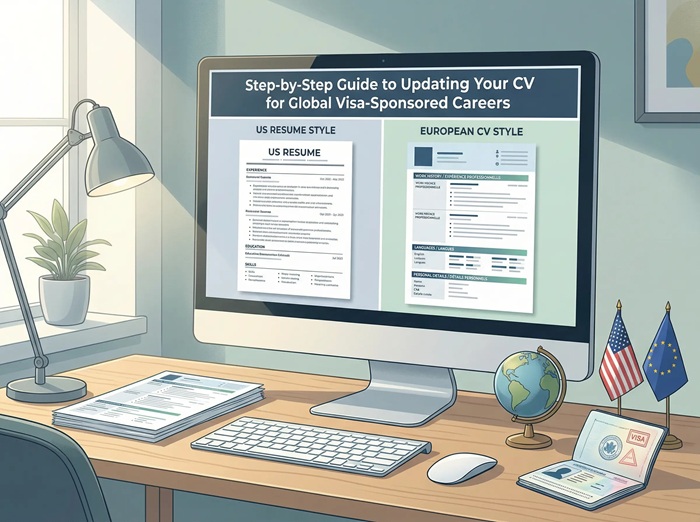
In many European countries, CVs are typically one to two pages and may include personal details such as nationality or date of birth, depending on local norms. In the United States and Canada, resumes are usually one to two pages, photos are not included, and personal details are avoided.
In some parts of the Middle East and Asia, employers may expect more personal context. In other regions, such details can harm your application.
Always follow the standards of the country you are applying to, not the country you are applying from.
Choose the Right CV Format for International Applications
Chronological, functional, or hybrid
For international roles, the chronological or hybrid format is usually safest.
A chronological CV lists work experience in reverse order and is widely understood across borders. A hybrid CV combines skills with experience and works well for career changers or those with diverse backgrounds.
Purely functional CVs are less common internationally and may confuse recruiters.
Keep the structure familiar and logical
Your CV should follow a predictable order:
- Contact information
- Professional summary
- Skills
- Work experience
- Education
- Certifications
- Additional information
A familiar structure reduces cognitive effort for recruiters reviewing international candidates.
Write a Clear and Neutral Professional Summary
Why the summary matters more internationally
Recruiters reviewing international CVs often look for quick reassurance. They want to know who you are, what you do, and why you are relevant, without guessing.
A strong professional summary provides that clarity.
What to include in your summary
Your summary should answer:
- What is your profession?
- How many years of experience do you have?
- What industries or roles have you worked in?
- What value do you bring?
Keep it brief. Three to four lines is enough.
Avoid clichés and exaggerated claims. Clear, factual language builds trust, especially across cultures.
Focus on Transferable Skills and Global Value
Why transferable skills are critical
When applying internationally, employers may not recognize company names, job titles, or local qualifications. Transferable skills help bridge that gap.
These include:
- Communication
- Leadership
- Project management
- Problem-solving
- Technical proficiency
- Adaptability
- Cross-cultural collaboration
Explain your skills through results, not labels.
Show how your experience applies globally
Instead of assuming employers will understand your background, explain it.
For example:
- Clarify the scale of organizations you worked for
- Explain your role within teams
- Describe outcomes in measurable terms
Context reduces uncertainty and increases confidence in your profile.
Adapt Your Language for an International Audience
Use clear, neutral English
If you are applying in English, keep the language simple and professional. Avoid:
- Local slang
- Idioms
- Cultural references
- Overly complex sentences
Clear language is easier for non-native readers and automated systems.
Choose consistent spelling and terminology
Decide whether to use British or American English and remain consistent throughout the CV. Mixing styles can look careless.
Use internationally recognized job titles where possible. If your title is local, please consider including a brief explanation.
Make Your CV ATS-Friendly
Why ATS matters for international jobs
Most international employers use applicant tracking systems to manage high volumes of applications. These systems filter CVs before humans see them.
An ATS-friendly CV improves your chances of passing the first screening.
Common ATS mistakes to avoid
Avoid:
- Tables and columns
- Text boxes
- Graphics and icons
- Images
- Unusual fonts
Use a single-column layout with standard headings.
Use keywords naturally
Keywords should reflect:
- Job titles
- Skills
- Tools
- Technologies
Incorporate them naturally into your experience and skills sections. Keyword stuffing can backfire.
Handle Education and Qualifications Carefully
Explain unfamiliar qualifications
International employers may not recognize your degree or institution. Provide context when necessary.
You can:
- Spell out abbreviations
- Mention international equivalency if applicable
- Highlight globally recognized certifications
Avoid assuming equivalence. Clear explanation builds credibility.
Place education strategically
For recent graduates, education may appear before work experience. For experienced professionals, it usually comes after.
Follow the convention that best suits your career stage and the target country.
Address Work Authorization and Location Clearly
Why this matters to employers
International hiring involves legal and logistical considerations. Employers want clarity on your eligibility to work.
If you already have the right to work, say so clearly. If you require sponsorship, be honest.
Ambiguity can lead to rejection even when skills match.
Where to include this information
You can mention work authorization in:
- Your professional summary
- A short note near contact details
- A separate section if appropriate
Be factual and concise.
Decide What Personal Information to Include
Follow local norms, not personal preference
Including personal information incorrectly can harm your application.
Avoid adding:
- Date of birth
- Marital status
- Religion
- Photograph
Unless local standards explicitly require them, do not include them.
When in doubt, leave them out.
Proofread With Extra Care
Why errors matter more internationally
Language mistakes can be interpreted as poor communication skills, even when English is not your first language.
Proofreading is not optional.
How to proofread effectively
- Review the CV multiple times
- Read it aloud
- Check consistency in dates and formatting
- Ask someone else to review it
Accuracy and clarity build trust.
File Format and Naming for International Applications
Use the correct file format
Unless instructed otherwise, submit your CV as a PDF. This preserves formatting across devices and systems.
Follow employer instructions carefully. Ignoring them signals poor attention to detail.
Name your file professionally
Use a clear format such as:
FirstName_LastName_CV.pdf
Avoid vague or casual file names.
Common Mistakes to Avoid When Applying Internationally
Many candidates fail because of avoidable errors:
- Using a domestic CV without changes
- Ignoring cultural expectations
- Overloading the CV with irrelevant details
- Using poor formatting
- Being unclear about work eligibility
Avoiding these mistakes alone improves your chances significantly.
Writing a CV for an international job requires more than translating your existing resume. It requires awareness, adaptation, and strategic clarity.
A strong international CV:
- Respects local hiring norms
- Communicates value clearly
- Works with automated systems
- Builds trust across cultures
Your experience is important, but how you talk about it is just as important. Think of your CV as a professional document that changes with each job market and opportunity.
Authoritative sources used in the article:
Indeed: How To Write an International Resume
https://www.indeed.com/career-advice/resumes-cover-letters/international-resumeResume.io: International CV & Resume Format Best Practices
https://resume.io/blog/international-resume-cv-writingEnhancv: How to Write an International Resume Guide
https://enhancv.com/blog/international-resume/


 Hugh Kinnins