 Hugh Kinnins
To work in Austria, you must do more than just translate your CV into German or English. When looking at applications, Austrian businesses follow specific rules that are based on the local business culture, the law, and long-established recruiting practices. If a CV doesn’t meet these standards, it can be turned down immediately, even if the prospect is well-qualified.
We will guide you on how to deliver an excellent CV that is acceptable in Austria. We will explain the organization, layout, length, language, personal information, and cultural norms. We will also guide you on how to display your profile in a way that Austrian employers expect and trust, whether you are an EU citizen, a professional from outside the EU, a recent graduate, or an experienced specialist.
Understanding the Austrian Job Application Culture
Why local standards matter in Austria
Austria has a structured and conservative professional culture compared with many other countries. Employers value order, clarity, and accuracy. Job applications are expected to be complete, formal, and well organized.
Austrian recruiters tend to favor traditional formats, unlike some markets that encourage creativity or personal branding. Recruiters may perceive a CV that appears informal, incomplete, or excessively stylized as unprofessional.
Understanding this cultural context is the first step to writing an effective Austrian CV.
Is a CV or Resume Used in Austria?
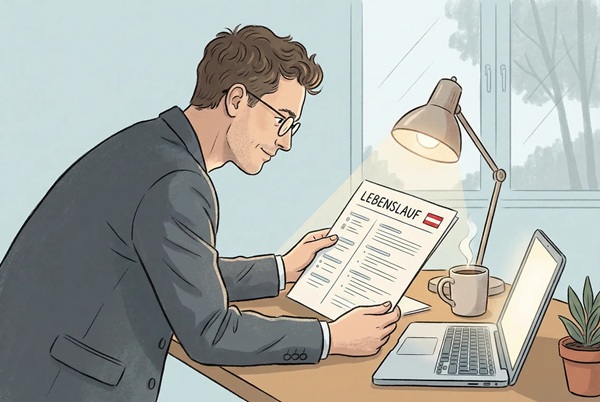
In Austria, the term CV (Lebenslauf) is used, not “resume.” The Austrian CV is closer to a traditional European CV than a short American resume.
Key differences include:
- More personal details are commonly included
- A chronological structure is expected
- Formal presentation is valued
- Supporting documents are often required
Submitting a one-page resume with minimal information, as is common in some countries, may be viewed as insufficient.
Standard Length of an Austrian CV
How long should a CV be in Austria?
The typical Austrian CV is:
- 1 to 2 pages for graduates and early-career professionals
- 2 to 3 pages for experienced professionals and specialists
Length is less important than completeness. Employers expect enough detail to understand your background clearly without unnecessary filler.
Very short CVs may appear superficial. Very long CVs may appear unfocused.
The Accepted CV Format in Austria
Chronological format is the standard
The reverse-chronological CV format is the norm in Austria. This means:
- Your most recent experience appears first
- Employment history is listed clearly with dates
- Education follows a similar structure
Functional or skills-only CVs are uncommon and may confuse recruiters unless there is a specific reason.
Recommended structure of an Austrian CV
A typical Austrian CV includes the following sections, in this order:
- Personal details
- Professional summary or profile
- Work experience
- Education
- Skills
- Language skills
- Additional information (optional)
Each section should be clearly labeled and easy to scan.
Personal Details: What to Include in an Austrian CV
Personal information is expected
Unlike in countries where personal details are discouraged, Austrian CVs commonly include personal information.
Standard personal details include:
- Full name
- Address (city and country are usually sufficient)
- Phone number
- Email address
- Date of birth
- Nationality
Including this information is normal and not considered unprofessional in Austria.
Should you include a photo?
Yes, a professional photo is still common and often expected in Austria, although it is not legally required.
If you include a photo:
- Use a professional headshot
- Dress formally
- Use a neutral background
- Avoid casual or social photos
Poor-quality photos can harm your application more than omitting a photo entirely.
Writing a Professional Summary for Austria
Is a summary required?
A short professional summary is recommended but not mandatory. When included, it should be factual and restrained.
Austrian employers prefer:
- Clear descriptions
- No exaggeration
- No marketing language
What to include in the summary
Your summary should briefly state:
- Your profession
- Your level of experience
- Your key area of expertise
Keep it to three or four lines. Avoid buzzwords and vague claims.
Work Experience Section: Austrian Expectations
How to list work experience
Work experience should be listed in reverse chronological order and include:
- Job title
- Employer name
- Location
- Employment dates
- Key responsibilities and achievements
Precision matters. Dates should be consistent and accurate.
Focus on responsibilities and outcomes
Austrian CVs often emphasize:
- Defined responsibilities
- Stability and continuity
- Reliability
Achievements are important, but they should be presented in a measured and factual way.
Avoid exaggerated claims. Clear descriptions build credibility.
Education Section in an Austrian CV
Education is taken seriously
Education plays an important role in Austrian hiring decisions, especially for regulated professions.
Include:
- Degree or qualification
- Institution name
- Location
- Dates of attendance
- Field of study
If your qualifications are from another country, clarity is essential.
Explaining foreign qualifications
For international applicants:
- Spell out degree titles
- Avoid abbreviations without explanation
- Mention equivalency if applicable
This helps employers assess your academic background accurately.
Skills Section: What Austrian Employers Look For
Technical skills first
Austrian employers value practical competence. Technical and professional skills should be clearly listed.
Examples include:
- Software tools
- Industry-specific skills
- Certifications
- Technical systems
Avoid vague skill lists. Focus on abilities you can demonstrate.
Soft skills in moderation
Soft skills are acceptable, but they should be credible and limited.
Instead of listing many traits, select a few that are relevant and supported by experience.
Language Skills Are Critical in Austria
How to list language skills
Language ability should be listed clearly and honestly.
Common format:
- German: Native/Fluent/Intermediate/Basic
- English: Fluent
- Other languages: level indicated
German proficiency is often essential, even in international companies.
Avoid overstating language ability
Language skills are often tested during interviews. Overstating proficiency can damage credibility.
Accuracy matters more than ambition.
Additional Sections Common in Austrian CVs
Optional but acceptable sections
Depending on your background, you may include:
- Certifications and training
- Publications
- Professional memberships
- Volunteer experience
- Driving license
Only include sections that add value to the role.
Formatting and Design Standards in Austria
Conservative design is preferred
Austrian CVs should look:
- Clean
- Structured
- Formal
Use:
- Standard fonts
- Consistent spacing
- Clear headings
- Single-column layout
Avoid heavy graphics, icons, or creative layouts.
ATS compatibility
Many Austrian employers use applicant tracking systems.
To remain ATS-friendly:
- Avoid tables and text boxes
- Avoid images in the body text
- Use standard section headings
- Submit as a PDF unless instructed otherwise
Language Choice: German or English?
Which language should you use?
Use:
- German if the job posting is in German
- English if the posting is in English
- Both, only if explicitly requested
Submitting a German CV for an English role or vice versa can signal poor attention to detail.
Work Authorization and Legal Status
Be clear and transparent
If you are not an Austrian or EU citizen, employers will want clarity.
You may briefly mention:
- EU citizenship
- Existing work permit
- Visa status
Avoid lengthy explanations. Clarity is enough.
Common Mistakes in Austrian CVs
Many applicants fail because they:
- Use informal layouts
- Omit personal details expected locally
- Overuse marketing language
- Submit incomplete applications
- Ignore language requirements
Understanding local norms helps avoid these mistakes.
Supporting Documents in Austria
CV alone is often not enough
In Austria, employers often expect:
- A cover letter (Motivationsschreiben)
- Certificates
- References or testimonials
A strong CV works best as part of a complete application package.
The Austrian CV format is structured, formal, and detail-oriented. It reflects a professional culture that values clarity, accuracy, and reliability.
A strong Austrian CV:
- Follows a chronological structure
- Includes appropriate personal details
- Uses professional language
- Respects local conventions
- Presents information clearly and honestly
Adapting your CV to Austrian standards, rather than relying on generic online formats, can significantly increase your chances of employment.
Authoritative sources used in the article:
Official Austrian Government Jobs and Application Tips
https://www.oesterreich.gv.at/en/themen/arbeit_beruf_und_pension/jobsuche/bewerbungstipps/Seite.171020Expatica Guide to CVs in Austria
https://www.expatica.com/at/working/finding-a-job/interviews-cv-austria-76147/Work in Austria — Application Tips
https://www.workinaustria.com/en/your-personal-guide/working-in-austria/application/Austria CV Templates and Information
https://resume.modelocurriculum.net/the-cv-in-austria.html

 Hugh Kinnins